
How Do Taxes Affect My Social Security Benefit?
Social Security can feel simple on the surface. You work, you pay into the system, and eventually you receive a monthly benefit in retirement. But once you start looking at taxes, the picture can get more confusing.
Many retirees are surprised to learn that Social Security may be taxable. Not always. Not for everyone. But depending on your other income, filing status, and overall retirement income strategy, a portion of your Social Security benefit may be included in your taxable income.
In this article, we’ll walk through five important ways taxes can affect your Social Security benefit. The goal isn’t to turn you into a tax expert. The goal is to help you understand why Social Security should not be planned in isolation and why your claiming decision, withdrawal strategy, pension income, investment income, and tax plan should all work together.
Key Point / Summary
Taxes can affect your Social Security benefit because your other retirement income may cause part of your benefit to become taxable.
Here are the five key things to understand:
- Social Security may be taxable depending on your combined income.
- Your IRA, 401(k), pension, wages, interest, dividends, and capital gains can affect taxation.
- Up to 85% of your Social Security benefit may be taxable, but that does not mean you lose 85% of your benefit.
- Your withdrawal strategy can influence how much of your benefit is taxed.
- Taxes should be considered before you claim Social Security, not after.
The Social Security Administration says you may have to pay taxes on up to 85% of your benefits if you file as an individual and your combined income exceeds $25,000, or if you file jointly and your combined income exceeds $32,000. Combined income includes adjusted gross income, tax-exempt interest, and one-half of your annual Social Security benefits.
This is why Social Security tax planning matters. You don’t want to look at Social Security by itself. You want to understand how it fits into your full retirement income plan.
If you’re within a few years of retirement, a Retirement Readiness Review can help you test Social Security timing, withdrawals, taxes, and income strategies before you make decisions that may affect the next 20 or 30 years of your life.
How Do Taxes Affect My Social Security Benefit?
Taxes affect your Social Security benefit by determining whether part of your benefit is included in taxable income.
That means your monthly Social Security check may not be completely tax-free. Depending on your income, filing status, and other retirement income sources, the IRS may count part of your benefit as taxable income.
But this is where people often misunderstand the rule.
When you hear that “up to 85% of Social Security may be taxable,” that does not mean the government takes 85% of your Social Security check. It means up to 85% of your benefit may be included in the income calculation used to determine your federal income tax.
That’s a big difference.
For example, if someone receives $30,000 per year in Social Security, up to $25,500 could potentially be included as taxable income. That taxable portion would then be taxed according to their tax bracket. They are not automatically losing $25,500.
The real issue is that Social Security taxation can create a ripple effect. IRA withdrawals, pensions, part-time work, capital gains, interest, dividends, and Roth conversions can all increase income. As income rises, more of your Social Security may become taxable.
That’s why the timing of retirement income matters.
1. Social Security May Be Taxable Based on Combined Income

The first thing to understand is the combined income formula.
Social Security taxation is not based only on your Social Security benefit. It’s based on a broader income calculation.
The Social Security Administration defines combined income as your adjusted gross income, plus tax-exempt interest income, plus one-half of your annual Social Security benefits.
In plain English, the formula looks like this:
Combined income = Adjusted gross income + tax-exempt interest + ½ of Social Security benefits (This is also referred to as the Provisional Income Formula)
This matters because your Social Security benefit can become taxable even if Social Security is not your only source of income.
For example, let’s say you have Social Security plus IRA withdrawals, pension income, bank interest, dividends, and capital gains. Those income sources may push your combined income above the thresholds where Social Security becomes taxable.
The IRS explains that to determine whether benefits are taxable, taxpayers take half of the Social Security they collected during the year and add it to their other income. Other income can include pensions, wages, interest, dividends, and capital gains.
For individual filers, part of Social Security may be taxable once combined income exceeds $25,000. For married couples filing jointly, part of Social Security may be taxable once combined income exceeds $32,000.
Those thresholds are surprisingly low for many retirees.
That’s why people can be caught off guard. They may assume that once they stop working, taxes will become simple. But if they have a pension, IRA withdrawals, investment income, or part-time work, Social Security taxation can still matter.
Here’s the key point: Social Security taxation is not only about how much Social Security you receive. It’s about how Social Security interacts with your other income.
That’s why retirement income planning should start before you claim benefits.
If you claim Social Security and then later realize your IRA withdrawals, pension income, or investment gains are causing tax surprises, your options may be more limited. But if you plan ahead, you may have more flexibility.
You may be able to coordinate:
- Social Security timing
- IRA withdrawals
- Roth conversions
- Taxable investment sales
- Pension start dates
- Part-time income
- Charitable giving
- Capital gains
- Cash reserves
The goal is not necessarily to avoid all taxes. That may not be realistic. The goal is to avoid accidental taxes and make informed decisions.
A Retirement Readiness Review can help you look at your combined income before retirement so you can understand how Social Security may be taxed in your situation.
- Social Security taxation is based on combined income.
- Combined income includes adjusted gross income, tax-exempt interest, and half of Social Security.
- IRA withdrawals, pensions, interest, dividends, and capital gains can affect the calculation.
- The taxation thresholds can surprise retirees.
- Social Security should be coordinated with the rest of your income plan.
2. Your Other Retirement Income Can Make More of Your Benefit Taxable

The second thing to understand is that your other income can affect how much of your Social Security benefit becomes taxable.
This is where retirement income planning gets important.
Many retirees have several income sources. That may include Social Security, pensions, traditional IRA withdrawals, 401(k) withdrawals, taxable brokerage accounts, CDs, savings interest, dividends, rental income, part-time work, and annuity income.
Each source may affect taxes differently.
For example, traditional IRA and 401(k) withdrawals are generally taxable as ordinary income. Pension income is often taxable. Interest from bank accounts or CDs is usually taxable. Dividends and capital gains from taxable investment accounts may also affect your income.
When those income sources increase your combined income, they may cause a larger portion of your Social Security to become taxable.
This creates a planning challenge.
Let’s say you need extra money for a car, home repair, vacation, or helping a family member. If you take a large withdrawal from a traditional IRA, that withdrawal may increase your taxable income. It may also cause more of your Social Security to be taxable.
That doesn’t mean the withdrawal is wrong. It just means the tax impact may be larger than expected.
The same thing can happen with Roth conversions.
A Roth conversion may be a smart long-term strategy in some situations. But the converted amount generally adds to taxable income in the year of conversion. That can affect how much Social Security is taxable in that year.
Again, that doesn’t mean Roth conversions are bad. It means they need to be planned.
The same is true for capital gains. If you sell investments in a taxable brokerage account, the gains may increase income. That can affect Social Security taxation.
This is why retirees need to be careful with large income events.
A large IRA withdrawal, capital gain, Roth conversion, or part-time income year may affect more than just the obvious tax bill. It may also change how much of your Social Security is taxable.
One helpful way to think about this is that retirement income sources are connected. Pulling money from one account can affect another part of the plan.
It’s like adjusting one ingredient in a recipe. If you add more salt, sugar, or flour, the whole recipe changes. Retirement income works the same way. More IRA income can affect Social Security taxation. More capital gains can affect taxable income. More income can affect Medicare premiums. One decision can create multiple consequences.
That’s why “just withdraw what you need” is not a complete retirement income strategy.
You want to know:
- Which account should provide income this year?
- How much can you withdraw before creating a tax spike?
- Should you use taxable savings, IRA money, or Roth money?
- Should you spread large expenses across tax years?
- Should you do Roth conversions before Social Security begins?
- Should you delay Social Security to create more tax-planning flexibility?
- Should you hold more cash for large expenses?
A good retirement income plan helps you answer those questions before you need the money.
- Other retirement income can affect Social Security taxation.
- Traditional IRA and 401(k) withdrawals can increase taxable income.
- Capital gains, dividends, interest, pensions, and wages can also matter.
- Large one-time withdrawals may create tax surprises.
- Social Security tax planning should be part of your withdrawal strategy.
3. Up to 85% May Be Taxable, But That Does Not Mean You Lose 85%
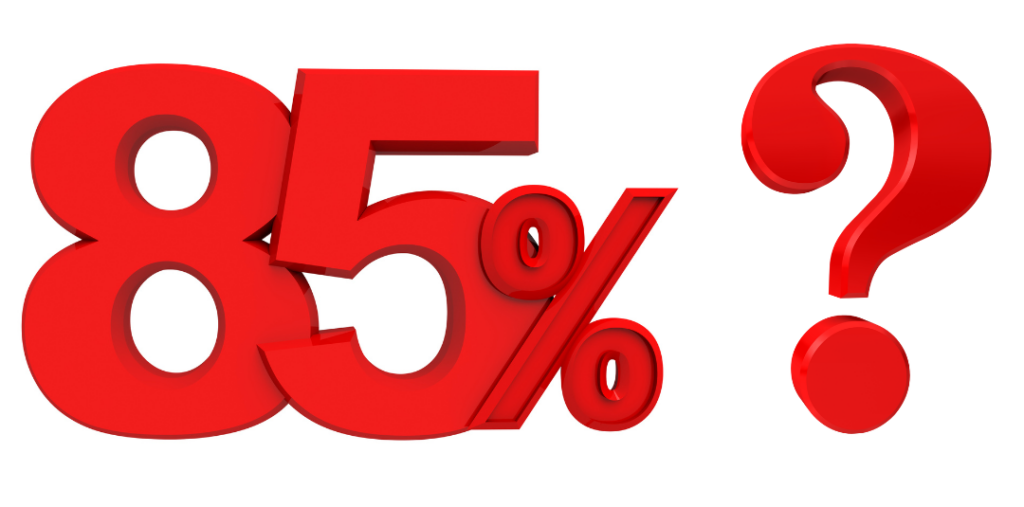
The third thing to understand is the phrase “up to 85% taxable.”
This phrase creates a lot of confusion.
When retirees hear that up to 85% of Social Security may be taxable, some think it means they could lose 85% of their benefit to taxes.
That is not how it works.
The IRS says up to 85% of a taxpayer’s benefits may be taxable when income exceeds certain levels. For married couples filing jointly, that generally applies when income is more than $44,000. For single, head of household, or qualifying widow or widower filers, it generally applies when income is more than $34,000.
But taxable does not mean confiscated.
It means that up to 85% of your benefit may be included in your taxable income. That taxable amount is then taxed according to your ordinary income tax rates.
Here’s a simplified example.
Suppose you receive $40,000 per year from Social Security. If 85% of that benefit is taxable, then $34,000 may be included in your taxable income.
That does not mean you pay $34,000 in tax.
It means $34,000 is added to your taxable income calculation and taxed based on your tax bracket after deductions and other tax rules.
This distinction matters because misunderstanding the rule can lead to bad decisions.
I’ve seen people panic and think Social Security is a terrible deal because “the government taxes it all away.” That’s not accurate.
Others ignore the tax issue completely and then get surprised at tax time. That’s not good either.
The right approach is in the middle.
You should understand that Social Security can be taxable, but you should also understand how the taxation actually works.
This is especially important when comparing claiming strategies.
For example, claiming Social Security early may create smaller benefits but more years of payments. Delaying Social Security may create larger benefits later, but those larger benefits may interact differently with required minimum distributions, pensions, and investment withdrawals.
Neither option is automatically better. The tax impact should be tested.
The same applies to married couples.
If both spouses have Social Security, pensions, and IRA withdrawals, their combined income may be high enough that a portion of benefits is taxable. If one spouse dies, the surviving spouse may eventually file as a single taxpayer. That can change tax brackets and Social Security taxation.
This is one of the reasons retirement planning should consider the surviving spouse.
A plan that works well while both spouses are alive may need to be tested for what happens after one spouse passes away.
The goal is not just to maximize Social Security. The goal is to maximize after-tax retirement income, spouse protection, and long-term flexibility.
A Retirement Readiness Review can help compare different Social Security and withdrawal strategies so you can see what you may actually keep after taxes.
- “Up to 85% taxable” does not mean you lose 85% of your benefit.
- It means up to 85% may be included in taxable income.
- The taxable portion is taxed according to your tax bracket.
- Misunderstanding this rule can lead to poor decisions.
- The best strategy should look at after-tax income, not just gross benefits.
4. Your Withdrawal Strategy Can Influence Social Security Taxes

The fourth thing to understand is that your withdrawal strategy can influence how much tax you pay on Social Security.
This is where planning can make a meaningful difference.
Once you retire, your income may come from several buckets:
- Cash savings
- Taxable brokerage accounts
- Traditional IRA or 401(k) accounts
- Roth IRA or Roth 401(k) accounts
- Pensions
- Social Security
- Annuities
- Rental income
- Part-time work
Each bucket may affect taxes differently.
If you take withdrawals from a traditional IRA or 401(k), those withdrawals are generally taxable and may increase combined income. If you use Roth IRA money, qualified withdrawals may not increase taxable income in the same way. If you use cash savings, there may be little or no tax impact from the withdrawal itself.
That creates planning opportunities.
For example, suppose you have a year where your income is already near a Social Security taxation threshold. Taking extra money from a traditional IRA may push more of your Social Security into taxable income. But using Roth money or cash for a one-time expense may create a different tax result.
That doesn’t mean Roth or cash should always be used first. It means the withdrawal choice should be intentional.
Another important planning window may occur after retirement but before Social Security begins.
Let’s say you retire at 65 but plan to delay Social Security until 70. Those years before Social Security may create lower-income years. During those years, you may consider controlled IRA withdrawals or Roth conversions. This may help reduce future required minimum distributions and create more tax flexibility later.
Required minimum distributions matter because the IRS generally requires withdrawals from many tax-deferred retirement accounts starting at age 73.
If you ignore IRA withdrawals until RMD age, you may have less control later. RMDs may increase taxable income and may also affect Social Security taxation.
This is why some retirees may benefit from taking IRA withdrawals before they are forced to. Others may not. It depends on the plan.
There are also charitable strategies that may help in some situations. For example, qualified charitable distributions from IRAs may be useful for people who are charitably inclined and meet the rules. This is not a strategy for everyone, but it shows how withdrawal planning and tax planning can work together.
The main point is that account selection matters.
You should not simply pull money from whichever account is easiest. The easiest account may not be the best account.
A good withdrawal plan asks:
- What income do we need this year?
- What tax bracket are we in?
- How much Social Security is taxable?
- Are we near an income threshold?
- Should we use IRA, taxable, Roth, or cash?
- Are future RMDs likely to become a problem?
- Will this withdrawal affect Medicare premiums?
- What happens to the surviving spouse?
That last question matters. A withdrawal strategy that only focuses on this year may miss bigger long-term issues.
A Retirement Readiness Review can help you test different withdrawal orders and see how they affect Social Security taxation over time.
- Traditional IRA and 401(k) withdrawals may increase combined income.
- Roth withdrawals may provide tax flexibility if qualified.
- Cash can help fund expenses without creating the same taxable income.
- RMDs can affect future Social Security taxation.
- Withdrawal order should be coordinated with Social Security tax planning.
5. Taxes Should Be Planned Before You Claim Social Security

The fifth thing to understand is that taxes should be considered before you claim Social Security.
Many people make the Social Security decision first and think about taxes later. That can be a mistake.
Your claiming age affects your monthly benefit. But it also affects how your income plan works.
If you claim Social Security at 62, you may reduce the amount you need to withdraw from savings early in retirement. That may preserve your portfolio in the short term. But your Social Security check will generally be smaller than if you waited.
If you delay Social Security, you may need to use savings first. That can increase portfolio withdrawals early, but it may create a larger Social Security benefit later. It may also create tax-planning opportunities before benefits begin.
For example, delaying Social Security may give you time to do Roth conversions or controlled IRA withdrawals before Social Security enters the combined income calculation.
That does not mean delaying is always better. It simply means the tax planning window should be considered.
Social Security claiming should be coordinated with:
- Retirement date
- Pension start date
- IRA and 401(k) withdrawals
- Roth conversions
- Required minimum distributions
- Taxable investment gains
- Medicare premiums
- Spouse protection
- Life expectancy
- Cash reserves
The best claiming strategy is not always the one with the highest monthly check. It’s the one that works best inside your total retirement plan.
For some people, claiming early may make sense because they need income, have health concerns, want to reduce withdrawals, or have other priorities.
For others, delaying may make sense because they want a larger lifetime income stream, better survivor protection, or more tax planning flexibility before claiming.
The danger is making the decision based on one factor.
For example:
- “I’m taking it early because I don’t trust the system.”
- “I’m waiting until 70 because that’s what everyone says is best.”
- “I’m claiming now because I don’t want to touch my IRA.”
- “I’m delaying because I want the biggest check.”
Each of those may be reasonable in some circumstances. But none of them is a complete plan by itself.
The right question is:
What claiming strategy gives me the best after-tax retirement income, flexibility, and confidence?
That question forces you to look at the entire plan.
It also helps you avoid another common mistake: ignoring tax withholding.
If your Social Security is taxable and you don’t withhold enough, you may owe money when you file your tax return. The Social Security Administration says beneficiaries can request voluntary tax withholding from benefits and can manage that request through a personal my Social Security account.
That can help avoid unpleasant tax surprises.
You may also need to coordinate withholding from IRA withdrawals, pensions, or estimated tax payments. The point is not just to calculate the tax. It’s to create a system so taxes are handled throughout the year.
A Retirement Readiness Review can help you look at Social Security before you claim so taxes, income, and withdrawals are coordinated from the beginning.
- Social Security claiming should be coordinated with taxes.
- Claiming early may reduce early withdrawals but creates a smaller benefit.
- Delaying may create a larger benefit and possible tax-planning opportunities.
- Tax withholding should be reviewed once benefits begin.
- The best decision should be based on after-tax retirement income.
Conclusion
Taxes can affect your Social Security benefit in ways many retirees don’t expect.
Your benefit may be partially taxable depending on combined income. Other income sources like IRA withdrawals, pensions, wages, interest, dividends, and capital gains can affect how much of your Social Security is taxed. Up to 85% of your benefit may be taxable, but that does not mean you lose 85% of your check.
The most important lesson is that Social Security should not be planned by itself.
It should be coordinated with your income plan, tax strategy, investment withdrawals, Roth conversions, required minimum distributions, Medicare premiums, and spouse protection.
The mistake is making Social Security decisions based only on the monthly benefit. Retirement is about after-tax income. It’s about how all the pieces work together.
If you’re within a few years of retirement and wondering how taxes may affect your Social Security benefit, a Retirement Readiness Review can help. We’ll look at where you are today, define your goals, test Social Security claiming strategies, review account withdrawals, and help you understand the trade-offs before you retire.
You don’t have to move your money. You don’t have to buy a product. You just need a clear plan before making one of the most important retirement income decisions of your life.
FAQs
Is Social Security taxable in retirement?
Yes, it can be. Social Security may be taxable depending on your combined income and filing status. For individual filers, benefits may be taxable when combined income exceeds $25,000. For married couples filing jointly, benefits may be taxable when combined income exceeds $32,000.
Does “up to 85% taxable” mean I lose 85% of my Social Security?
No. It means up to 85% of your Social Security benefit may be included in taxable income. That taxable portion is then taxed according to your tax bracket. It does not mean 85% of your monthly benefit is taken away.
Can IRA withdrawals make my Social Security taxable?
Yes. Traditional IRA and 401(k) withdrawals can increase your combined income, which may cause more of your Social Security benefit to be taxable. That’s why your withdrawal strategy should be coordinated with your Social Security and tax plan.