
Will Working Part-Time Reduce My Social Security Income?
Working part-time in retirement can be a great idea. It can bring in extra income, reduce pressure on your investments, give you structure, keep you socially connected, and make the transition into retirement feel less abrupt.
But there’s one big question many people worry about: Will working part-time reduce my Social Security income?
The answer is: maybe, but it depends on your age and how much you earn. After your full retirement age, you can generally work as much as you want without your Social Security retirement benefit being reduced because of earnings. But if you claim Social Security before full retirement age and continue working, the Social Security earnings test may temporarily reduce your benefit if your earned income is above certain limits.
Key Point / Summary
Working part-time may reduce your Social Security payments temporarily if you claim benefits before full retirement age and earn more than the annual earnings limit.
Short on time? Here are the five key things to understand:
- Your age matters more than the fact that you’re working.
- If you’re under full retirement age, earnings limits may apply.
- Once you reach full retirement age, your earnings no longer reduce your Social Security retirement benefit.
- Only earned income from work counts toward the earnings test.
- Part-time work can still be a smart retirement strategy if it’s coordinated with your income plan.
For 2026, if you’re under full retirement age for the entire year, Social Security deducts $1 from your benefits for every $2 you earn above $24,480. In the year you reach full retirement age, Social Security deducts $1 for every $3 you earn above $65,160, but only counts earnings before the month you reach full retirement age.
This can sound scary, but it’s important to understand the rule correctly. Benefits withheld because of the earnings test are not necessarily gone forever. Social Security explains that once you reach full retirement age, they recalculate your benefit to give you credit for months when benefits were reduced or withheld because of excess earnings.
If you’re within a few years of retirement and considering part-time work, a Retirement Readiness Review can help you test whether working, claiming Social Security, delaying Social Security, or using investments first gives you the best overall outcome.
Will Working Part-Time Reduce My Social Security Income?
Working part-time can reduce your Social Security payments if all three of these are true:
- You are receiving Social Security retirement benefits.
- You are younger than full retirement age.
- Your earned income is above the annual earnings limit.
If you’re already full retirement age or older, the rule is much simpler. Starting with the month you reach full retirement age, you can receive your benefits with no limit on how much you earn.
That means the real question is not just, “Can I work part-time?”
The better question is:
Should I work part-time before or after claiming Social Security?
That one decision can affect your monthly benefits, taxes, investment withdrawals, Medicare premiums, and overall retirement income strategy.
1. Your Age Matters More Than the Fact That You’re Working
The first thing to understand is that working part-time does not automatically reduce your Social Security income.
Your age matters.
If you’ve already past your full retirement age, you can generally work as much as you want and still receive your Social Security retirement benefit.
But if you claim Social Security before full retirement age, working part-time can create an issue if your earnings are above the limit.
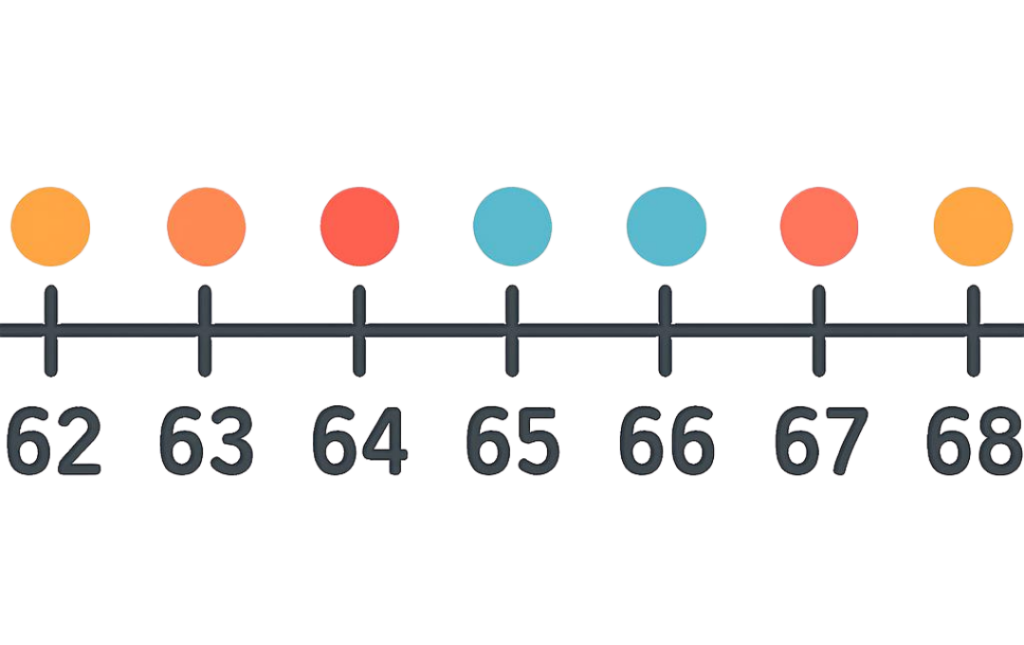
For many people, full retirement age is 67. Specifically, if you were born January 2, 1960 or later, your full retirement age for retirement insurance benefits is 67.
That means someone who claims Social Security at 62, 63, 64, 65, or 66 may need to pay close attention to earned income if they continue working.
This is where many people get confused.
They hear, “You can work and receive Social Security at the same time.” That’s true. But they may not realize that working before full retirement age can temporarily reduce benefits if earnings are high enough.
For example, if you claim Social Security at 62 and then take a part-time job that pays more than the annual earnings limit, Social Security may withhold part of your benefits.
That doesn’t mean you can’t work. It means you need to understand the math before making the decision.
This is especially important for people who want to retire gradually.
A gradual retirement can be a great strategy. You might leave your full-time job, work part-time for a few years, and use that income to delay portfolio withdrawals. You might even delay Social Security to increase your future benefit.
But if you claim Social Security early while also earning too much from part-time work, you may be surprised when Social Security withholds some of your checks.
That surprise is avoidable.
Before claiming benefits, you should ask:
- What is my full retirement age?
- How much will I earn from part-time work?
- Will I be under the earnings limit?
- Should I delay claiming benefits?
- Would part-time income allow me to delay Social Security?
- How will work income affect taxes?
The decision should be based on your full retirement income plan, not just the desire to start Social Security as soon as possible.
A Retirement Readiness Review can help you compare claiming Social Security early while working versus delaying benefits while using part-time income.
- Working part-time does not automatically reduce Social Security.
- The earnings test generally matters before full retirement age.
- Once you reach full retirement age, earnings no longer reduce your retirement benefit.
- People born January 2, 1960 or later generally have a full retirement age of 67.
- Your claiming age and work income should be planned together.
2. If You’re Under Full Retirement Age, Earnings Limits May Apply

The second thing to understand is the earnings limit.
If you’re younger than full retirement age and receive Social Security retirement benefits, Social Security may reduce your benefit if your work income is above the annual limit.
For 2026, if you are under full retirement age for the entire year, the earnings limit is $24,480. If you earn more than that, Social Security deducts $1 from benefits for every $2 earned above the limit.
Here’s a simple example.
Let’s say you claim Social Security before full retirement age and earn $30,480 from part-time work in 2026.
That is $6,000 above the $24,480 limit.
Social Security would generally withhold $1 for every $2 above the limit.
That means $3,000 of benefits could be withheld.
This does not mean your Social Security benefit is reduced dollar-for-dollar. It also does not mean all your work income is taken away. But it may affect your cash flow.
The rule changes in the year you reach full retirement age.
For 2026, if you reach full retirement age during the year, the earnings limit is $65,160 for the months before you reach full retirement age. Social Security deducts $1 in benefits for every $3 earned above that amount, and only counts earnings before the month you reach full retirement age.
That second rule is more generous because it applies as you get closer to full retirement age.
Here’s another example.
Suppose you reach full retirement age in November 2026 and earn $68,160 from January through October.
That is $3,000 above the $65,160 limit.
Social Security would generally withhold $1 for every $3 over the limit.
That means $1,000 of benefits could be withheld before you reach full retirement age.
Then, beginning with the month you reach full retirement age, the earnings limit goes away.
This is why timing matters.
The same part-time job can have different Social Security consequences depending on whether you are 63, 66, 67, or older.
You should also understand that Social Security withholds full benefit checks until the required amount has been withheld. They don’t usually reduce every monthly check by a small amount. That can create a bigger cash-flow surprise if you were expecting a benefit every month.
For example, if Social Security needs to withhold $3,000 and your monthly benefit is $1,500, they may withhold two full monthly payments.
This is not something you want to discover after you’ve built your budget around receiving that check.
A Retirement Readiness Review can help estimate whether part-time earnings may trigger the earnings test and how that may affect your retirement income.
- If you’re under full retirement age, an earnings limit may apply.
- For 2026, the limit is $24,480 if you’re under full retirement age all year.
- For 2026, the limit is $65,160 in the year you reach full retirement age.
- The reduction is based on earnings above the limit, not total earnings.
- Benefit withholding can create cash-flow surprises.
3. Once You Reach Full Retirement Age, Your Earnings Do Not Reduce Your Benefit
The third thing to understand is the rule after full retirement age.
Once you reach full retirement age, the earnings test no longer applies. Starting with the month you reach full retirement age, your earnings no longer reduce your benefits, no matter how much you earn.
This is a big deal.
It means you can receive Social Security and work part-time, full-time, seasonally, or occasionally without your retirement benefit being reduced because of earnings.
That gives retirees more flexibility.
For example, you might decide to:
- Work part-time for extra travel money.
- Consult in your old profession.
- Start a small business.
- Work seasonally.
- Help a family business.
- Take a lower-stress job.
- Continue working because you enjoy it.
Once you’re full retirement age, those earnings do not trigger the Social Security earnings test.
However, that does not mean part-time work has no financial impact at all.
Your earnings may still affect taxes. Social Security benefits may be taxable depending on your combined income. Other income, including wages, pensions, interest, dividends, capital gains, and retirement account withdrawals, can affect whether part of your Social Security benefit is taxable.
That means working after full retirement age may not reduce your Social Security check, but it may increase your taxable income.
That’s an important distinction.
For example, someone at full retirement age could earn $40,000 from part-time consulting and still receive their full Social Security retirement benefit. But that $40,000 may affect their tax bracket, how much Social Security is taxable, and possibly Medicare-related costs depending on overall income.
This is why retirees need to separate two different issues:
Benefit reduction and taxation.
Benefit reduction is about the earnings test before full retirement age.
Taxation is about whether part of your Social Security benefit is included in taxable income.
They are not the same thing.
Once you reach full retirement age, working does not reduce your benefit because of the earnings test. But taxes can still matter.
This is where planning gets more interesting. Working part-time after full retirement age may actually be a smart strategy if it allows you to reduce portfolio withdrawals, delay spending down investments, or create more flexibility.
But it should still be coordinated with taxes and the rest of your retirement income plan.
- After full retirement age, your earnings do not reduce your Social Security retirement benefit.
- You can work part-time or full-time and still receive your benefit.
- Taxes may still apply depending on your total income.
- Benefit reduction and taxation are different issues.
- Part-time work after full retirement age can be a powerful planning tool.
4. Only Earned Income Counts Toward the Earnings Test
The fourth thing to understand is what type of income counts.
The Social Security earnings test does not count every type of income.
If you work for someone else, Social Security counts wages. If you’re self-employed, Social Security generally counts net earnings from self-employment.
That means the earnings test is about income from work.
It generally does not count income like:
- Pension income
- IRA withdrawals
- 401(k) withdrawals
- Roth IRA withdrawals
- Investment income
- Interest
- Dividends
- Capital gains
- Annuity income
- Rental income in many cases
- Veterans benefits
- Other government benefits
This is an important distinction.
For example, if you claim Social Security at 63 and withdraw money from your IRA, that IRA withdrawal may affect your taxes, but it generally does not count as wages for the Social Security earnings test.
If you sell investments and realize capital gains, that may affect your taxes, but it generally does not count as earned income for the earnings test.
If you receive a pension, that may affect taxes, but it does not count as wages from a job.
However, if you earn money from part-time employment or self-employment, that income can count.
This matters for people who are trying to fill an income gap before full retirement age.
Let’s say you retire at 64 and claim Social Security. You still need extra income. You have two options:
- Withdraw more from investments.
- Work part-time.
The investment withdrawal may affect taxes but not the earnings test. The part-time job may affect both taxes and the earnings test if your wages exceed the limit.
That doesn’t mean one option is automatically better. It simply means they affect your plan differently.
There’s also a special first-year rule that may help some people who retire mid-year. If your earnings will be more than the limit for the year and you receive retirement benefits for only part of the year, a special rule may let Social Security pay a full benefit for any whole month they consider you retired, regardless of yearly earnings.
This can matter if you retire in June after earning a full-time salary earlier in the year. Without the special rule, you might appear to be over the annual limit even though you stopped working before claiming benefits.
These rules can get technical, so it’s worth checking before you claim.
You don’t want to accidentally trigger withholding because you misunderstood what counts as earnings or how the first-year rule works.
A Retirement Readiness Review can help compare different income sources and show how each may affect your Social Security, taxes, and retirement income plan.
- The earnings test generally applies to wages and net self-employment income.
- IRA withdrawals and investment income may affect taxes but not the earnings test.
- Pension income generally does not count as earnings for this test.
- Part-time work can affect benefits before full retirement age if earnings are too high.
- The special first-year rule may help if you retire mid-year.
5. Part-Time Work Can Still Be a Smart Retirement Strategy
[Image]
The fifth thing to understand is that part-time work can still be a smart strategy.
Some people hear about the earnings test and immediately think, “Then I shouldn’t work.”
That’s not necessarily true.
Working part-time can create several benefits, even if it temporarily reduces Social Security payments before full retirement age.
Part-time work may help you:
- Delay Social Security.
- Reduce withdrawals from investments.
- Keep your mind active.
- Stay socially connected.
- Lower stress by creating extra income.
- Pay for travel or hobbies.
- Bridge the gap to Medicare.
- Build a larger cash reserve.
- Ease into retirement gradually.
In some cases, part-time work may even increase your future Social Security benefit. Social Security calculates benefits using your highest 35 years of earnings. If your part-time work replaces a lower-earning year in your record, it may increase your benefit. This is not guaranteed, but it can happen.
More importantly, part-time work can give you options.
For example, let’s say you want to retire at 63 but don’t want to claim Social Security yet. A part-time job may allow you to delay benefits until full retirement age or even age 70. That could result in a larger monthly benefit later.
Or maybe you claim benefits early but keep part-time earnings below the annual limit. In that case, you may receive Social Security while also earning some extra income.
Or maybe you work enough that some benefits are withheld temporarily, but the work income more than makes up for the temporary reduction.
The point is not that working is bad.
The point is that working should be coordinated with your claiming strategy.
You should ask:
- Am I claiming before full retirement age?
- How much will I earn from part-time work?
- Will I exceed the earnings limit?
- Would it be better to delay Social Security?
- How will work income affect taxes?
- Will I need health insurance before Medicare?
- Will part-time work reduce portfolio withdrawals?
- How does this affect my spouse?
For many retirees, the emotional benefit of work also matters.
Retirement is not only a financial transition. It’s a lifestyle transition. Some people don’t want to stop working completely. They want flexibility, purpose, and extra income without the pressure of full-time work.
That can be a very good thing.
But if you’re going to work part-time and collect Social Security before full retirement age, you need to understand the rules.
A Retirement Readiness Review can help you test whether part-time work strengthens your retirement plan and whether claiming Social Security early, delaying benefits, or using savings first makes the most sense.
- Part-time work can reduce pressure on your investments.
- It may help you delay Social Security for a larger future benefit.
- Work income can provide flexibility and confidence.
- The earnings test should not automatically scare you away from working.
- The key is coordinating work, Social Security, taxes, and withdrawals.
Conclusion
So, will working part-time reduce your Social Security income?
The answer depends mostly on your age.
If you’re younger than full retirement age and claim Social Security, part-time work may temporarily reduce your benefit if your earnings exceed the annual limit. For 2026, that limit is $24,480 if you’re under full retirement age for the entire year. In the year you reach full retirement age, the limit is $65,160 for earnings before the month you reach full retirement age.
Once you reach full retirement age, your earnings no longer reduce your Social Security retirement benefit, no matter how much you earn.
But don’t confuse benefit reduction with taxes. Even if your Social Security check is not reduced, your work income may still affect your tax situation.
The bigger lesson is this: working part-time can be a very smart retirement strategy, but it should be planned carefully.
You don’t want to accidentally claim benefits early, earn too much, trigger withholding, create tax surprises, or put unnecessary pressure on your retirement plan. But you also don’t want to avoid work just because the rules sound confusing.
If you’re within a few years of retirement and wondering whether part-time work will help or hurt your plan, a Retirement Readiness Review can help. We’ll test your Social Security claiming options, part-time income, taxes, investment withdrawals, and income gap so you can make a clear decision.
You don’t have to move your money. You don’t have to buy a product. You just need to understand the trade-offs before making one of the biggest income decisions of your retirement.
FAQs
Can I work part-time and still collect Social Security?
Yes. You can work part-time and collect Social Security. However, if you are younger than full retirement age and earn more than the annual earnings limit, Social Security may temporarily reduce your benefit. Starting with the month you reach full retirement age, there is no earnings limit for Social Security retirement benefits.
What income counts against the Social Security earnings limit?
Wages from a job and net earnings from self-employment generally count toward the Social Security earnings limit. IRA withdrawals, pensions, investment income, interest, dividends, and capital gains may affect taxes, but they generally do not count as earnings for the earnings test.
Are Social Security benefits withheld because of work gone forever?
Not necessarily. When you reach full retirement age, Social Security recalculates your benefit to give you credit for months when benefits were reduced or withheld because of excess earnings. That can increase your monthly benefit going forward.